
Who Is at Fault for a Parking Lot Accident in Hilton Head or Beaufort?
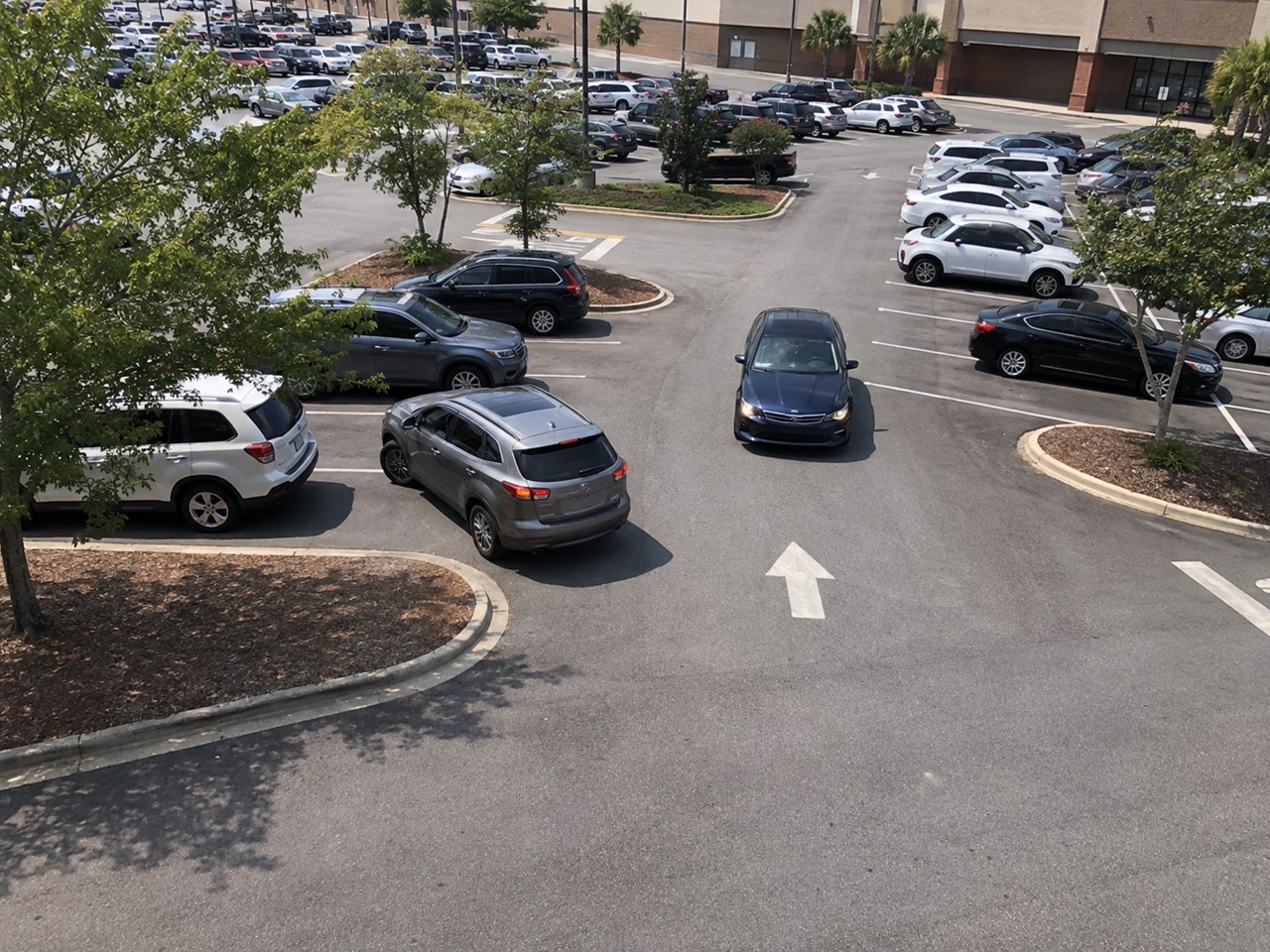
Parking Lot Fault Usually Comes Down To Carelessness, Not A Simple Right-Of-Way Rule
A collision in a shopping center parking lot may occur at 10 or 15 miles per hour rather than at highway speed, but that doesn't mean the injuries or the insurance dispute will be minor. A driver can back into another vehicle, pull across an aisle without looking, strike a pedestrian, or enter a busy lane when another vehicle is already too close to stop.
Determining fault after a South Carolina car accident in a private parking lot can also work differently from determining fault on a public road.
South Carolina's ordinary rules of the road generally apply to highways, and state law defines a highway as a publicly maintained way open to vehicular travel. Many shopping center and grocery store parking lots are privately owned, so a statute governing highway intersections or official traffic-control devices won't necessarily decide who caused a collision inside the lot.
That doesn't leave drivers without rules. Everyone still has a duty to use reasonable care under the circumstances. Signs, painted arrows, vehicle movements, visibility, speed, surveillance footage, witness accounts, and the layout of the parking lot can all help establish which driver acted carelessly.
At Twenge + Twombley, our South Carolina car accident lawyers represent people injured in Beaufort, Hilton Head Island, Bluffton, and throughout the Lowcountry. Parking lot cases often require a closer look at the scene because there may not be a traffic signal or traditional intersection rule that answers the question of fault on its own.
Do South Carolina Traffic Laws Apply Inside A Private Parking Lot?
Some do. Others may not.
South Carolina Code § 56-5-20 says that provisions of the state's Uniform Act Regulating Traffic on Highways relating to vehicle operation generally apply exclusively to highways unless a particular statute refers to another location.
Under § 56-5-430, a street or highway is a way that's publicly maintained and open to public vehicular travel.
A privately owned shopping center lot usually isn't a highway under that definition. That means a rule written specifically for vehicles approaching a highway intersection shouldn't automatically be applied to two parking aisles as though they were public streets.
There are important exceptions.
Section 56-5-20 expressly provides that Article 9, which contains accident and reporting requirements, and Article 23, which includes reckless-driving and impaired-driving provisions, apply on highways and elsewhere throughout South Carolina.
South Carolina also has a process under § 56-5-6310 that allows owners of qualifying private roads to consent to application of specified portions of the motor vehicle code.
So the location of the crash matters, but “it happened on private property” doesn't mean South Carolina motor vehicle law becomes irrelevant.
Does A Parking Lot Stop Sign Legally Decide Who Was At Fault?
Not necessarily, but it can still be important evidence.
South Carolina's motor vehicle code defines an “official traffic-control device” as a sign, signal, marking, or device placed by authority of a public body or official with jurisdiction.
A stop sign installed by a private shopping center may therefore be different from an official stop sign at a public intersection for purposes of a particular traffic statute.
That doesn't make the private sign meaningless.
If a shopping center clearly directs vehicles to stop before crossing a heavily traveled aisle and a driver ignores the sign, that conduct can still matter when determining whether the driver used reasonable care.
The same is true of one-way arrows, painted lanes, crosswalk markings, speed signs, and other features that establish the expected flow of vehicles and pedestrians through the property.
Fault ultimately depends on what a reasonably careful driver should have done under the circumstances, not simply whether the sign qualifies as an official state traffic-control device.
Does The Main Parking Lot Aisle Always Have The Right-Of-Way?
No South Carolina statute automatically gives every so-called “feeder lane” or main parking lot aisle the right-of-way over every smaller parking aisle.
Parking lots are designed differently. One shopping center may have a clearly marked through lane controlled by stop signs at every intersecting aisle. Another may have four unmarked aisles meeting in the middle of the lot.
The actual configuration matters.
| Parking Lot Crash | Evidence That Can Matter |
|---|---|
| Driver Backing Out Of A Space | Whether the driver checked behind the vehicle, how far the vehicle had backed out, visibility, speed of approaching traffic, and camera footage |
| Two Cars Backing At The Same Time | Which vehicle began moving first, whether either driver stopped, backup-camera or sensor evidence, witness accounts, and points of impact |
| Collision Between Two Aisles | Stop signs, arrows, lane width, traffic pattern, sight lines, speed, braking, and the vehicles' positions before impact |
| Pedestrian Collision | Crosswalk markings, visibility, vehicle speed, lighting, pedestrian and driver movements, and surveillance video |
A driver moving through a parking aisle isn't automatically free from fault merely because another vehicle was backing out. If the moving driver was speeding through the lot, looking at a phone, cutting across spaces, or had enough time to see and avoid the backing vehicle, fault can potentially be shared.
Who Is Usually At Fault When A Car Backs Out Of A Parking Space?
A driver backing out of a parking space must exercise reasonable care before entering an area where other vehicles or pedestrians may already be traveling.
Evidence that the backing driver failed to look behind the vehicle, backed quickly into an occupied aisle, or continued moving after another vehicle was plainly visible can support a finding of negligence.
But the location of the damage doesn't tell the whole story.
Suppose one vehicle has already backed almost completely into the aisle and stops. Another driver approaches quickly and strikes it. That's different from a vehicle suddenly backing directly into the side of a car that was already passing behind the space.
Photographs showing the point of impact, final vehicle positions, parking-space orientation, and nearby sight obstructions can help reconstruct which scenario actually occurred.
What If Both Cars Were Backing Up?
Two vehicles backing up from opposite spaces are among the easiest parking lot crashes for insurers to dispute.
Both drivers may say they checked before moving. Both may insist the other vehicle came out suddenly. Sometimes there's no independent witness.
That doesn't mean fault has to be divided 50-50 automatically.
Surveillance footage may show that one vehicle had already stopped before impact. Vehicle damage may help establish the angle of the collision. A witness may have seen one driver backing quickly without looking. Modern vehicles may also contain electronic information or camera footage relevant to what occurred.
The available evidence should drive the fault determination rather than an insurance adjuster's assumption that two backing vehicles must share responsibility equally.
Can The Parking Lot Owner Share Responsibility For The Crash?
Potentially.
South Carolina premises liability law generally requires a property operator to use reasonable care to keep areas used by invited visitors in a reasonably safe condition.
In Hancock v. Mid-South Management Co., the South Carolina Supreme Court reiterated that a parking lot operator isn't an insurer of everyone's safety but must use reasonable care to keep premises used by invitees reasonably safe.
That principle can become relevant when the physical condition or design of a parking lot contributes to a vehicle collision.
Examples might include severely obstructed sightlines, deteriorated or confusing traffic markings, an unreasonably dangerous layout, or another property condition that the owner created or knew about but failed to reasonably address.
But the mere existence of a questionable parking lot condition isn't enough. There also needs to be evidence connecting that condition to the collision.
South Carolina's Shelton v. LS&K, Inc. decision illustrates that distinction. The case involved a pedestrian struck by a vehicle exiting a restaurant parking lot. The plaintiff alleged a tree obstructed the driver's view, but the court affirmed summary judgment for the property owner because the evidence didn't establish the necessary breach and causation.
If an unsafe condition on commercial property actually contributed to the crash, the property owner's responsibility for maintaining a reasonably safe premises may need to be investigated along with the drivers' conduct.
Can More Than One Person Be At Fault?
Yes. Parking lot collisions are often good examples of why fault isn't always an all-or-nothing decision.
A driver may have backed out carelessly while another driver was traveling too fast for a crowded lot. A property condition may have blocked both drivers' view. In another case, two drivers may each have failed to pay sufficient attention at an unmarked crossing.
South Carolina uses modified comparative negligence.
In Nelson v. Concrete Supply Co., the South Carolina Supreme Court adopted a rule allowing a negligence plaintiff to recover when the plaintiff's negligence isn't greater than the negligence of the defendant. When there are multiple defendants, the plaintiff's negligence is compared with the combined negligence of the defendants.
If an injured person's own fault is 50 percent or less, recovery can still be available, but the damages are reduced in proportion to that person's fault. If the injured person is more than 50 percent responsible, recovery is barred under South Carolina's comparative-negligence rule.
For claims arising on or after January 1, 2026, South Carolina Code § 15-38-15 also contains updated rules governing the apportionment of fault and damages when multiple tortfeasors contributed to the same injury.
That can become important when a parking lot case involves two drivers and a potentially negligent property owner rather than a simple dispute between two motorists.
Do You Have To Report A Parking Lot Accident To Police?
South Carolina's accident-reporting statutes are among the motor vehicle provisions that apply beyond public highways.
Under § 56-5-1260, a driver involved in an accident resulting in injury or death must immediately notify the appropriate local police department, sheriff's office, or Highway Patrol office, depending on where the crash occurred.
Drivers involved in an injury crash or a collision involving an attended vehicle also have duties to stop and exchange identifying information under §§ 56-5-1210 through 56-5-1230.
If an accident involving injury, death, or at least $1,000 in apparent total property damage isn't investigated by law enforcement, § 56-5-1270 generally requires the operator or owner to submit the required written report and insurance verification to the Department of Motor Vehicles within 15 days.
Those requirements can apply even if the underlying collision occurred in a privately owned parking lot because Article 9 applies throughout South Carolina.
Does The Police Report Decide Who Was At Fault?
No.
A police officer can document the drivers, vehicles, witnesses, statements, damage, and physical layout of the scene. That information may be very useful when an insurer evaluates the claim.
But the collision report itself doesn't conclusively determine civil negligence.
South Carolina Code § 56-5-1290 provides that reports required under §§ 56-5-1260 through 56-5-1280 aren't evidence of either negligence or due care at a civil trial. A law enforcement officer may use a report to refresh the officer's recollection while testifying.
That's one reason photographs, video, witnesses, and other independent evidence can become so important when two drivers tell different stories.
What Evidence Can Help Prove A Parking Lot Accident?
Parking lot evidence can disappear quickly, especially surveillance footage.
If you're physically able to do so after a crash, useful steps can include:
- Photograph the Entire Scene: Don't photograph only the vehicle damage. Capture the parking spaces, lanes, arrows, signs, sight obstructions, crosswalks, and the direction each vehicle was traveling.
- Identify Surveillance Cameras: Look for cameras on storefronts, light poles, parking garages, and nearby businesses. Ask that relevant footage be preserved before it's automatically overwritten.
- Get Witness Information: A customer or employee who saw the vehicles before impact may resolve a dispute that vehicle damage alone can't answer.
- Exchange Driver and Insurance Information: Record the driver's name, contact information, insurer, vehicle information, and license plate.
- Report an Injury Crash: South Carolina's accident-reporting requirements can apply even on private property.
- Get Appropriate Medical Care: Some injuries aren't obvious at the scene, particularly when adrenaline is high immediately after a collision.
Taking these steps after a South Carolina car accident can help preserve evidence before the vehicles are repaired and video or witnesses become difficult to locate.
Who Pays If Another Driver Caused The Parking Lot Accident?
If another driver's negligence caused the collision, that driver's liability insurance is generally an important source of compensation for covered losses.
Depending on the injuries and available coverage, a claim may involve medical expenses, lost income, reduced earning capacity, pain and suffering, and other damages supported by the evidence.
If both drivers share fault, South Carolina's comparative negligence rule can reduce the injured driver's recovery by the percentage of responsibility assigned to that person.
If an unsafe property condition also contributed to the accident, a separate liability claim against the responsible property owner or operator may need to be evaluated.
Determining which insurance and compensation sources may apply after a South Carolina car accident starts with identifying everyone whose negligence contributed to the same injury.
Our South Carolina Car Accident Lawyers Can Investigate What Happened
A parking lot collision can become difficult to prove when there aren't public traffic signals, both drivers blame each other, or a shopping center's layout contributed to the crash.
Twenge + Twombley can investigate the movements of each vehicle, seek available surveillance footage, photograph and evaluate the parking lot layout, interview witnesses, review the collision report, and determine whether more than one person or business may bear responsibility.
If you were injured in a parking lot accident on Hilton Head Island, in Beaufort, or elsewhere in South Carolina's Lowcountry, contact us for a free case consultation. We'll review the evidence and explain how South Carolina's fault rules may apply to your crash.
"You want the best when you need the best. Karl Twenge and his staff were knowledgeable, outstanding & professional in all avenues of the law. He made sure that my recovery came first with the best medical treatment available. I had numerous serious injuries, as I was injured on Route I-95 in a rear-end collision by a tractor-trailer. I was completely satisfied with the final settlement of my lawsuit." - David, ⭐⭐⭐⭐⭐