
Can You Sue After an E-Bike Accident in South Carolina?
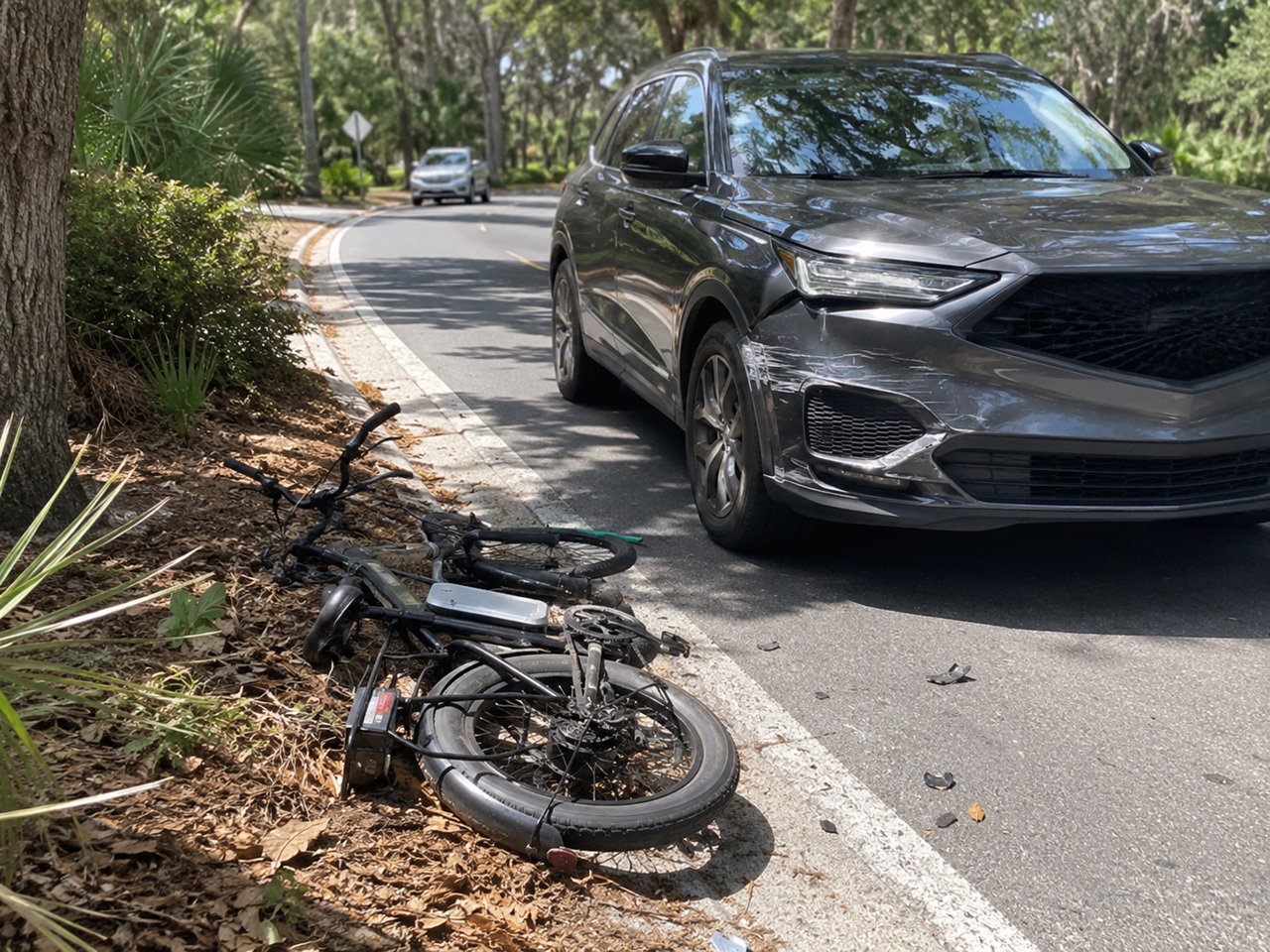
South Carolina Treats Qualifying E-Bikes Like Bicycles After A Crash
E-bikes have become a popular way to travel throughout South Carolina's Lowcountry, especially on Hilton Head Island, where miles of pathways connect neighborhoods, beaches, shopping areas, and resorts. As more riders use electric bicycles, serious crashes involving cars, pedestrians, other cyclists, and pathway hazards are becoming an increasingly important legal issue.
If you were hurt in an e-bike accident, you may be able to pursue compensation when another person's negligence caused your injuries. But determining which laws apply can depend on the type of e-bike, where the crash occurred, how the accident happened, and whether the bike meets South Carolina's statutory definition of an electric-assist bicycle.
At Twenge + Twombley Law Firm, we represent injured cyclists throughout Hilton Head Island, Beaufort, Bluffton, and the South Carolina Lowcountry. Understanding how state bicycle laws apply to an e-bike is an important first step in determining who may be responsible after a serious crash.
South Carolina Has A Specific Legal Definition For Electric-Assist Bicycles
South Carolina doesn't simply treat every two-wheeled vehicle with an electric motor as an e-bike.
Under South Carolina Code § 56-1-10, an electric-assist bicycle or bicycle with a helper motor must meet several requirements. The statutory definition generally includes a two- or three-wheeled bicycle that:
- Has fully operable pedals.
- Has an electric motor of no more than 750 watts, or one horsepower.
- Has a top motor-powered speed of less than 20 mph under the conditions specified by the statute.
- Meets applicable federal consumer-product requirements.
- Operates so the motor disengages or stops functioning when the brakes are applied, or the rider stops pedaling.
South Carolina law expressly states that qualifying electric-assist bicycles aren't mopeds. Section 56-5-3520 also makes riders of qualifying electric-assist bicycles subject to the statutory provisions that apply to bicyclists.
That classification matters after an accident because many of the same traffic rules governing traditional bicycles also govern qualifying e-bike riders.
A Modified Or Higher-Powered E-Bike Can Raise Classification Questions
Not every electric bicycle sold online or modified after purchase fits South Carolina's statutory definition.
A rider may have changed the motor, removed a speed restriction, altered the controller, or purchased a vehicle capable of significantly higher speeds or power than South Carolina allows for an electric-assist bicycle.
Once a bike falls outside the state's electric-assist bicycle definition, its legal classification needs a closer look.
For example, South Carolina's current definition of a moped includes certain electrically powered cycles designed with an input exceeding 750 watts but no more than 1,500 watts. Other vehicles may fall under different motor-vehicle classifications depending on their design and specifications.
That means it's too simplistic to say every e-bike over 750 watts automatically becomes a motorcycle or that every faster e-bike is automatically a moped. The bike's actual motor, speed capability, design, modifications, and applicable statutory definitions all matter.
After a serious crash, preserving the e-bike in its post-accident condition can be important if an insurance company disputes how it should legally be classified.
An E-Bike Rider Can Pursue A Negligent Driver Who Causes A Crash
A person riding a qualifying e-bike has legal rights on South Carolina roads just like other bicyclists.
Drivers can cause serious e-bike accidents by:
- Failing to yield at intersections or driveways.
- Turning across a cyclist's path.
- Driving while distracted.
- Following too closely.
- Passing without enough space.
- Opening a vehicle door into a cyclist's path.
- Driving under the influence.
- Failing to see a cyclist before entering or crossing a bicycle lane.
South Carolina bicycle law specifically requires motorists to maintain a safe operating distance from bicycles. When a bicycle lane is provided, motorists also must yield to bicyclists in the lane before entering or crossing it.
Those rules are contained in South Carolina's bicycle traffic statutes and can become important when determining whether a driver's conduct contributed to an e-bike crash.
The E-Bike's Manufacturer Label Can Become Important Evidence
South Carolina requires manufacturers and distributors of qualifying electric-assist bicycles to permanently label the bicycle with its wattage and maximum electrically assisted speed.
That label can become valuable evidence after an accident.
An investigation may examine:
- The manufacturer's label.
- The bike's make, model, and serial number.
- Motor wattage.
- Factory speed specifications.
- Controller or software settings.
- Any aftermarket modifications.
- Photographs showing the bike immediately after the crash.
South Carolina law also prohibits owners or users from removing or tampering with the required label. If a user modifies an electric-assist bicycle in a way that changes its speed capability, the statute requires replacement of the label to reflect the vehicle's wattage or horsepower.
An insurer may try to use modifications to argue that the rider wasn't operating a legally qualifying e-bike. Preserving the bike and its electronic and physical evidence can help establish what the machine was actually capable of doing when the accident occurred.
More Than One Party May Be Responsible For An E-Bike Accident
Not every e-bike injury claim involves a negligent car driver.
Depending on how the crash happened, potentially responsible parties may include:
- A Motor Vehicle Driver: A driver may be liable for failing to yield, making an unsafe turn, driving distracted, or otherwise causing the collision.
- Another Cyclist or E-Bike Rider: Reckless riding, excessive speed, or failure to yield on a pathway may contribute to a crash.
- An E-Bike Rental Company: A rental business may face questions about negligent maintenance or a dangerous mechanical condition when those failures contribute to an accident.
- A Manufacturer or Seller: A defective battery, brake system, frame, controller, or other component may create a product-liability issue in some cases.
- A Property Owner Or Government Entity: Dangerous pathway or roadway conditions may create additional liability questions depending on who controlled the property and what caused the accident.
Claims involving government-controlled roads or pathways can have different procedural requirements and deadlines, so those cases should be investigated quickly.
Evidence Can Determine Who Caused The E-Bike Crash
E-bike cases often require more than a police report.
Important evidence may include:
- Photos and Video: Images of vehicle damage, the bicycle, pathway conditions, traffic signals, skid marks, and injuries can help reconstruct the crash.
- Surveillance Footage: Businesses, homes, resorts, or traffic cameras may have recorded the collision or events leading up to it.
- Witness Statements: People who saw the crash may provide important information about speed, right of way, and driver behavior.
- E-Bike Data: Some electric bikes or connected devices may retain information related to speed, operation, or the ride.
- Manufacturer Information: Specifications can help determine whether the bike met South Carolina's electric-assist bicycle definition.
- Medical Records: Prompt treatment helps document the injuries and connect them to the accident.
The steps you take after an accident can affect how much evidence remains available later. Video can be overwritten, damaged e-bikes can be repaired or discarded, and witnesses can become difficult to locate.
South Carolina's Comparative Negligence Rule Can Affect Compensation
Insurance companies may argue that an e-bike rider contributed to the accident by speeding, failing to yield, riding against traffic, ignoring a signal, operating without required lighting, or violating another bicycle rule.
South Carolina follows a modified comparative negligence system. Under the rule adopted by the South Carolina Supreme Court, an injured person can generally recover when their own negligence isn't greater than the defendant's negligence.
That means a rider found 50 percent or less at fault may still recover damages, although the award is reduced according to the rider's percentage of fault.
For example, if an injured rider has $100,000 in recoverable damages but is found 20 percent responsible, the recovery would generally be reduced to $80,000.
If the rider's negligence exceeds 50 percent compared with the defendant or defendants, recovery can be barred.
Insurance companies therefore have a financial reason to shift as much blame as possible onto the rider. Evidence showing where the parties were, who had the right of way, and how the collision occurred can become critical when fault is disputed.
Hilton Head Allows Lower-Speed E-Bikes On Town Public Pathways
Hilton Head Island has addressed the growing use of e-bikes on its extensive public pathway network.
According to the Town of Hilton Head Island's current e-bike guidance, Class 1 and Class 2 lower-speed e-bikes are permitted on Town-owned public pathways.
The Town also notes that e-bikes operated on publicly owned pathways and roads within Town limits must have the permanent label required under South Carolina law showing the bike's wattage and maximum assisted speed.
That doesn't mean every electric vehicle can use the pathways. The Town states that Class 3 e-bikes and other motorized equipment aren't permitted on its public pathway system under the same rules.
Private pathways can be different. Gated communities and property-owner associations may establish their own rules governing e-bike use, so a rider on a private pathway needs to consider the rules that apply to that specific property.
Those local rules can become relevant after an accident, but violating a pathway rule doesn't automatically determine who is legally responsible for a collision. The entire sequence of events still needs to be evaluated.
E-Bike Crashes Can Cause Serious Head And Orthopedic Injuries
The electric motor doesn't provide a rider with any physical protection when a collision occurs.
E-bike accidents can cause:
- Broken wrists, arms, and legs.
- Shoulder and knee injuries.
- Facial injuries and dental damage.
- Road rash and severe lacerations.
- Spinal injuries.
- Internal injuries.
- Concussions and traumatic brain injuries.
Higher speeds can increase the severity of a fall or collision, particularly when an e-bike rider is struck by a larger passenger vehicle, SUV, or truck.
Someone who initially believes they suffered only bruises may later discover a concussion, fracture, soft-tissue injury, or other condition that requires significant treatment. Seeking appropriate medical attention after a serious accident protects your health and creates documentation of when symptoms began.
An Injured E-Bike Rider May Recover Several Types Of Damages
When another party's negligence causes an e-bike accident, available compensation may include:
- Medical Expenses: Emergency treatment, surgery, hospitalization, rehabilitation, medication, and future care.
- Lost Income: Wages lost while injuries prevent you from working.
- Reduced Earning Capacity: Future financial losses caused by permanent physical or cognitive limitations.
- Pain and Suffering: Compensation for physical pain and the broader impact the injuries have on daily life.
- Property Damage: Repair or replacement of the damaged e-bike and other personal property.
- Future Expenses: Long-term rehabilitation, medical equipment, or assistance required because of serious injuries.
The value of a claim depends on the injuries, available insurance, evidence of fault, future medical needs, and whether the rider is accused of contributing to the accident.
Most South Carolina Injury Lawsuits Have A Three-Year Filing Deadline
Under South Carolina Code § 15-3-530, many personal injury lawsuits must be filed within three years, subject to the state's accrual and discovery rules and any exceptions that may apply.
That doesn't mean an injured e-bike rider should wait three years to investigate the crash.
Surveillance video may disappear within days or weeks. A rental e-bike may be repaired and returned to service. Electronic data may be lost. Pathway conditions can change, and witnesses' memories can fade.
Getting legal advice early can help preserve the evidence long before the statute of limitations becomes an immediate problem.
Our E-Bike Accident Lawyers Can Investigate What Really Caused The Crash
An e-bike accident can raise questions that don't exist in a typical bicycle case. Did the bike legally qualify as an electric-assist bicycle? Was it modified? Which road or pathway rules applied? Did a driver fail to yield or pass safely? Did a rental company provide a defective bike? Is an insurance company unfairly trying to blame the rider?
At Twenge + Twombley Law Firm, our South Carolina personal injury lawyers investigate serious bicycle and e-bike accidents throughout Hilton Head Island, Beaufort, Bluffton, and the Lowcountry. We examine the physical evidence, applicable traffic laws, medical records, witness accounts, available video, insurance coverage, and every party that may share responsibility.
If you were injured in an e-bike accident in South Carolina, contact us for a free consultation. We can review what happened, explain the laws that apply, and help you understand your options for pursuing compensation.
"Ashley Twombley is a diligent and aggressive lawyer! He reviewed the facts of the case with me on a regular basis and kept me updated on all proceedings. He worked hard at getting a fair and amenable solution. Having such a competent, reliable attorney on my side lifted the weight off my shoulders and gave me peace of mind ... and a great result in the end!" - Kimberly J., ⭐⭐⭐⭐⭐